EMMA4EU Specialization School: Building Skills for Deforestation-Free Supply Chains
Home » Updates » EMMA4EU Specialization School: Building Skills for Deforestation-Free Supply Chains
Updates
About EMMA4EU Pro
The EMMA4EU Pro Specialization School is a four-week training programme designed to prepare students and professionals for the challenges of building deforestation-free supply chains. It focuses on creating sustainable and traceable supply chains, giving participants the tools to reduce deforestation risks and support companies in meeting new European standards as the EU Deforestation-free Products Regulation (EUDR).
By combining compliance, technology, and corporate responsibility, the school brings together knowledge from universities, experts, and businesses. It is part of the EMMA4EU project, co-funded by the European Commission’s Erasmus+ Programme.
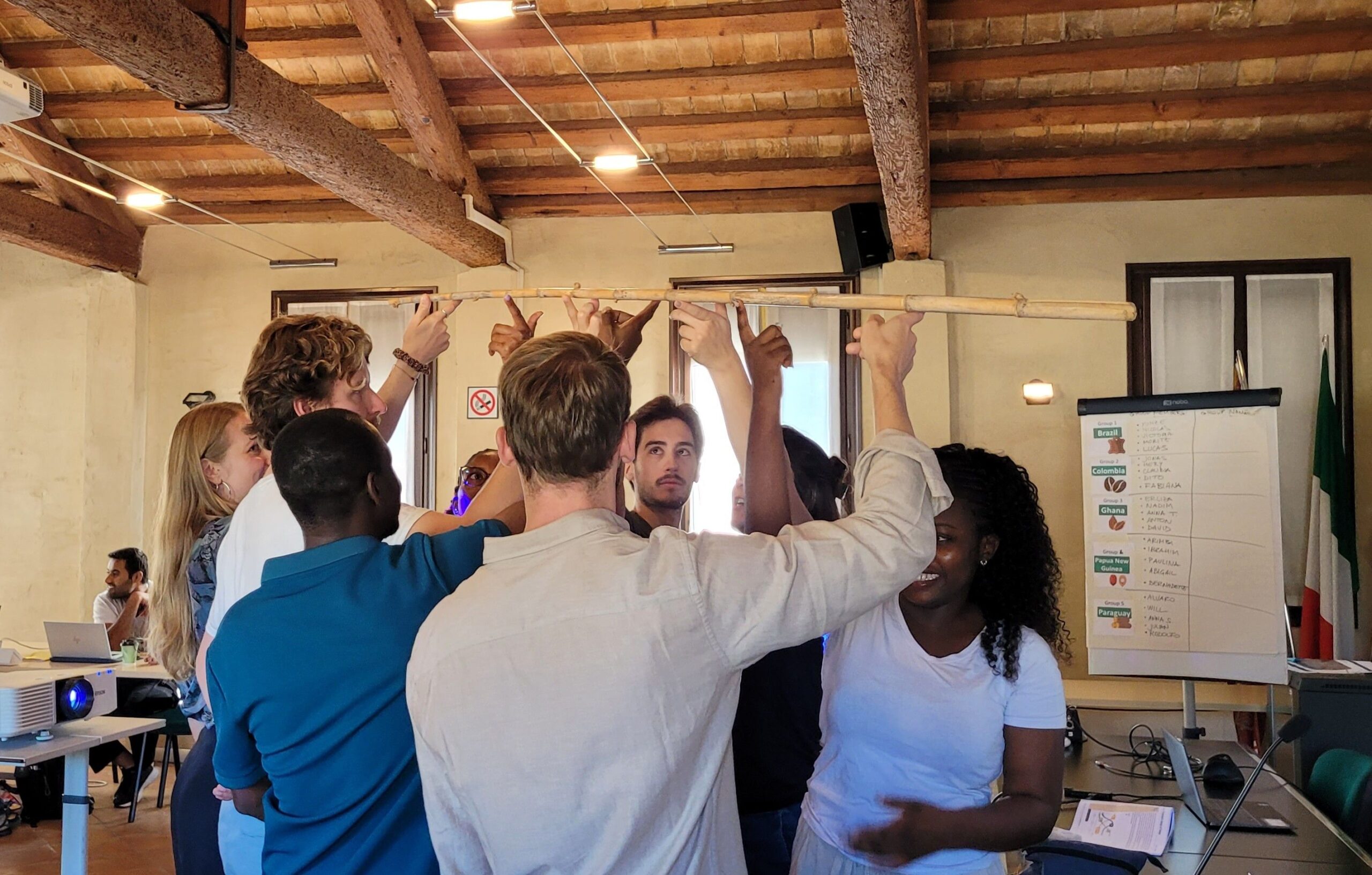
Class of EMMA4EU PRO Specialization School 2025
How was the first edition?
The first edition welcomed 25 participants from different countries, eager to gain hands-on experience in building deforestation-free supply chains. Lessons were hosted by the University of Padova (Italy) in the beautiful Corte Benedettina.
The course was structured in four modules:
Week 1 – Online: independent study supported by group discussions and exchanges with facilitators.
Weeks 2 and 3 – In person: interactive sessions with group work, seminars, round tables, field visits, and individual study.
Week 4 – In person: project development with personalised feedback from tutors.
At the end of the programme, participants presented their group projects to a committee, showcasing solutions for real-world supply chain case studies: the leather supply chain involving Brazil, the coffee supply chain involving Colombia, the cocoa supply chain involving Ghana, the wood supply chain involving Paraguay, and the Sustainable Palm Oil supply chain.
Professors and experts from the EMMA4EU consortium enriched the experience, sharing not only their expertise but also their passion for sustainable supply chains.
What did we do?
Throughout the course, participants combined classroom learning with practical experiences, such as:seminars and discussions to deepen understanding of EUDR and deforestation-free supply chains; and field visits to leading companies and associations that are actively addressing these challenges.
Students had the possibility to visit:
Fedrigoni Group, a multinational in paper and self-adhesive materials.
Florian S.p.A., a European leader in the broadleaves market.