EMMA4EU results: three years of building knowledge, skills and partnerships for deforestation-free supply chains

In July 2026, EMMA4EU officially achieved its objective and came to a close. The project set out to close the education and training gaps standing between EU policy ambition and the practical implementation of the European Regulation on Deforestation-free Products (EUDR) and deforestation-free supply chain (DFSC) management.

By combining education, research, innovation, stakeholder engagement and international cooperation, EMMA4EU did not just develop high-quality learning opportunities: it helped create lasting structural change in the way knowledge on deforestation-free supply chains is generated, shared and applied across the EU.

Three years on, the results speak for themselves, but EMMA4EU’s real contribution goes beyond what it produced. It lies in what those outputs have enabled: stronger professional competences, closer cooperation between education and practice, greater institutional capacity, and a growing international community committed to DFSC.

EMMA4EU in a nutshell

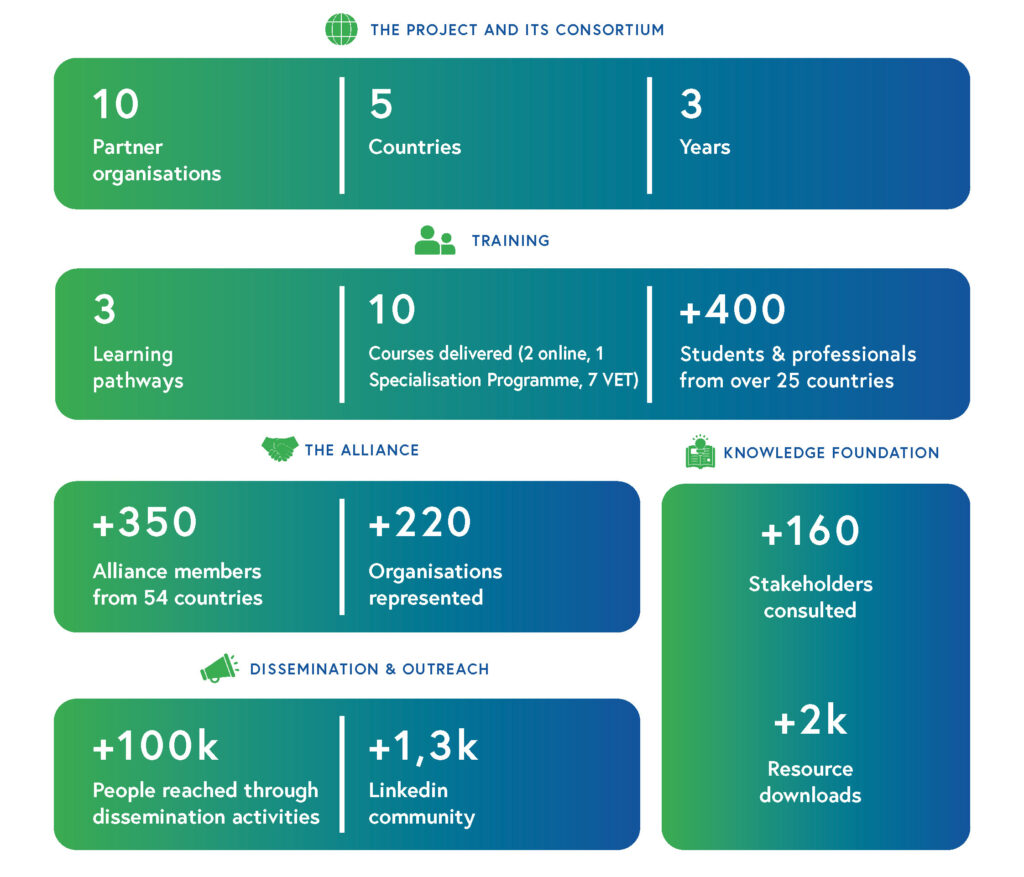
Co-funded by the European Union’s Erasmus+ Programme, EMMA4EU brought together ten partner organisations from five countries – Italy, the Netherlands, Germany, Denmark and Uganda – spanning universities, VET providers, businesses and NGOs. Over three years, the consortium pursued three complementary objectives:

JOIN

Connect stakeholders across sectors and countries to foster collaboration, dialogue and knowledge exchange on DFSC.

TRAIN

Equip students and professionals with the knowledge and skills to support EUDR implementation and advance DFSC and CSR practices.

LEARN

Generate and promote knowledge by developing research, educational resources and innovative curricula.

EMMA4EU: project at a glance

Building the skills for a new profession

Group picture of EMMA4EU students enrolled in the specialization school

EMMA4EU’s most immediate impact has been training a new generation of professionals for an emerging role: the Deforestation-Free Supply Chains Manager. A Training Needs Assessment involving more than 160 stakeholders shaped the curricula behind three complementary learning pathways, which together reached over 400 students and professionals from more than 25 countries.

Advanced training course in deforestation-free supply chain management & EUDR compliance

275 participants from over 20 countries

Field visit timber company

EMMA4EU Pro: four-week specialisation course in sustainable and deforestation-free supply chain management

25 participants from 13 nationalities

Vocational Education and Training (VET) courses

Seven certified sessions delivered across Italy, the Netherlands and Denmark for 132 professionals.

A knowledge foundation for deforestation-free supply chains

EMMA4EU produced one of the first comprehensive EU frameworks dedicated to DFSC, generating a set of complementary, openly accessible resources that bridge research, policy and practice.

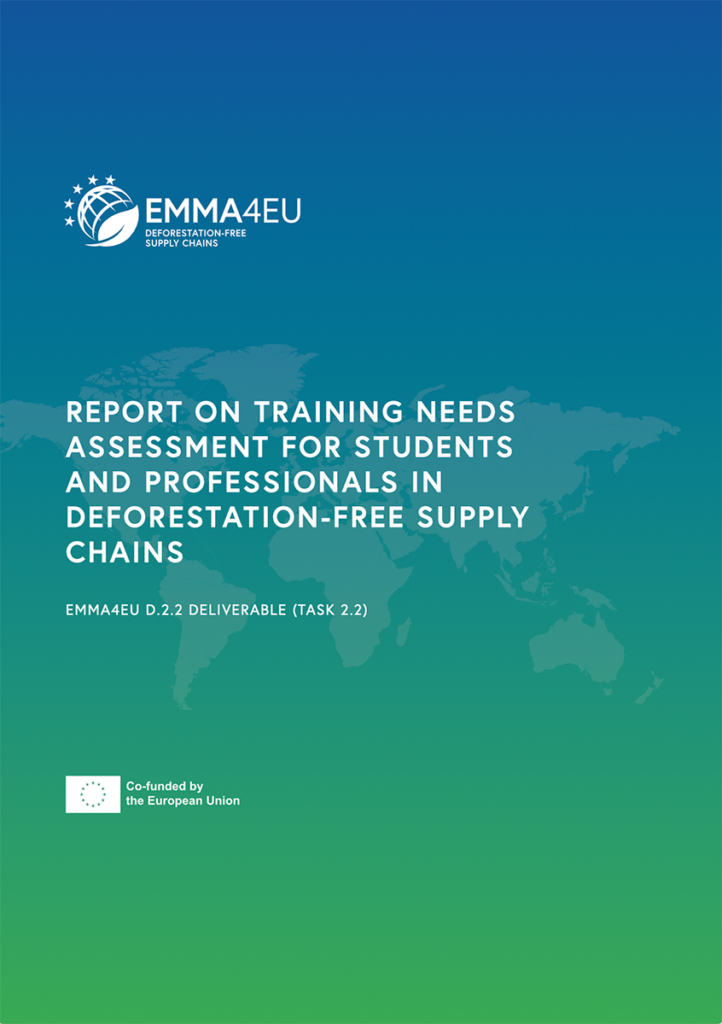
Report on Training Needs Assessment

+60 download

Mapping knowledge, skills and competence gaps among students and professionals, based on consultation with over 160 stakeholders.

Innovation report on Deforestation-free Supply Chain

+1,700 download

The report analyses 43 case studies of successful and less successful practices, with guidance on EUDR implementation.

EMMA4EU Roadmap to commitment

Roadmap to Commitment

+180 download

A step-by-step framework to support businesses, public authorities, financial institutions, and civil society in building Deforestation-Free Supply Chains.

An alliance powering the transition

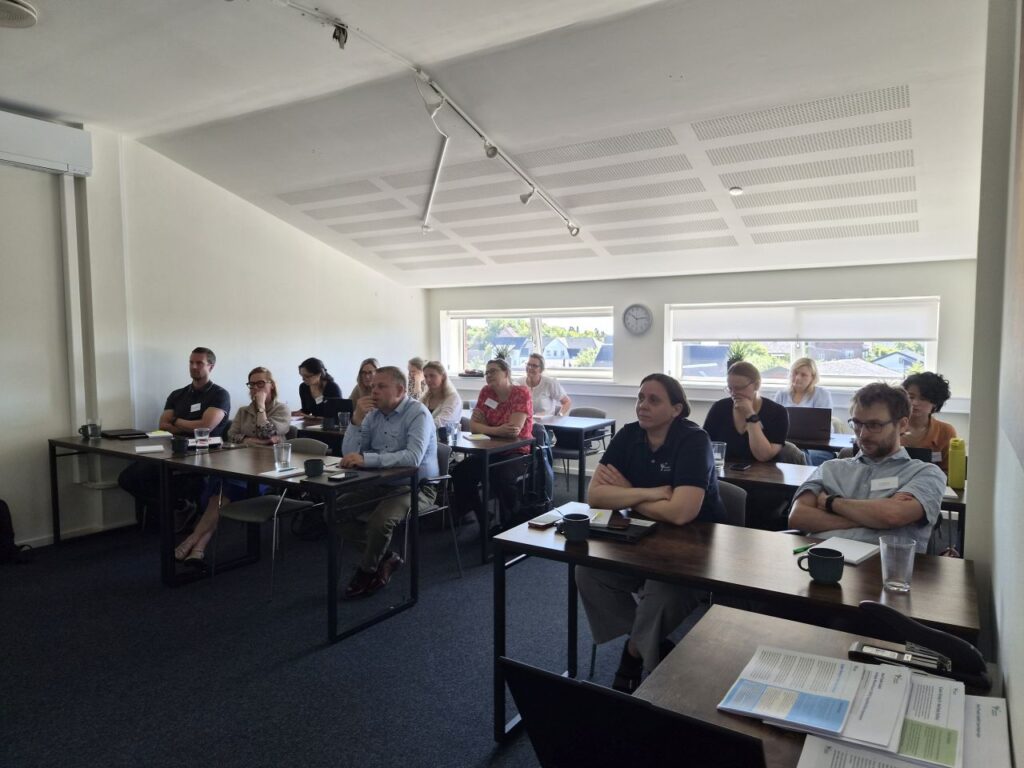
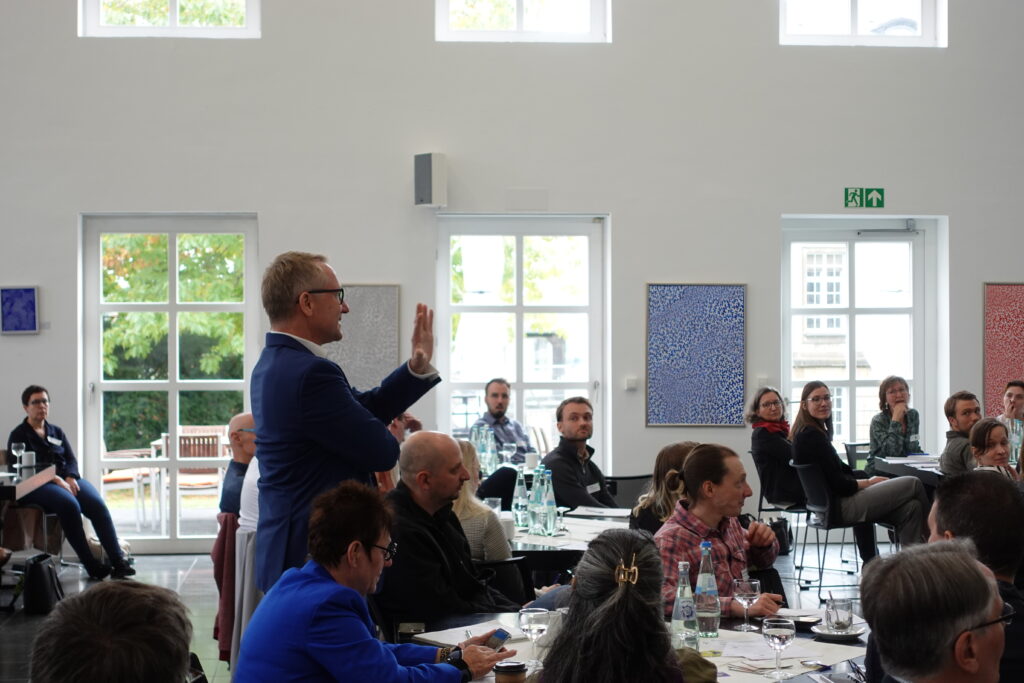
The EMMA4EU Alliance is one of the project’s most distinctive legacies. More than a digital platform, it has grown into an international community of over 350 members from 54 countries, representing 220 organisations. Alliance members exchanged experiences, challenges, ideas and professional opportunities through online spaces, in-person events and training sessions. At national level, four in-person workshops in Germany, Italy, Denmark and the Netherlands brought together more than 250 participants from academia, business, public institutions and civil society, translating EU policy ambitions into national dialogue and local action.

Three years of building knowledge, skills
and partnerships for deforestation-free supply chains